QEEG Brainwave Mapping
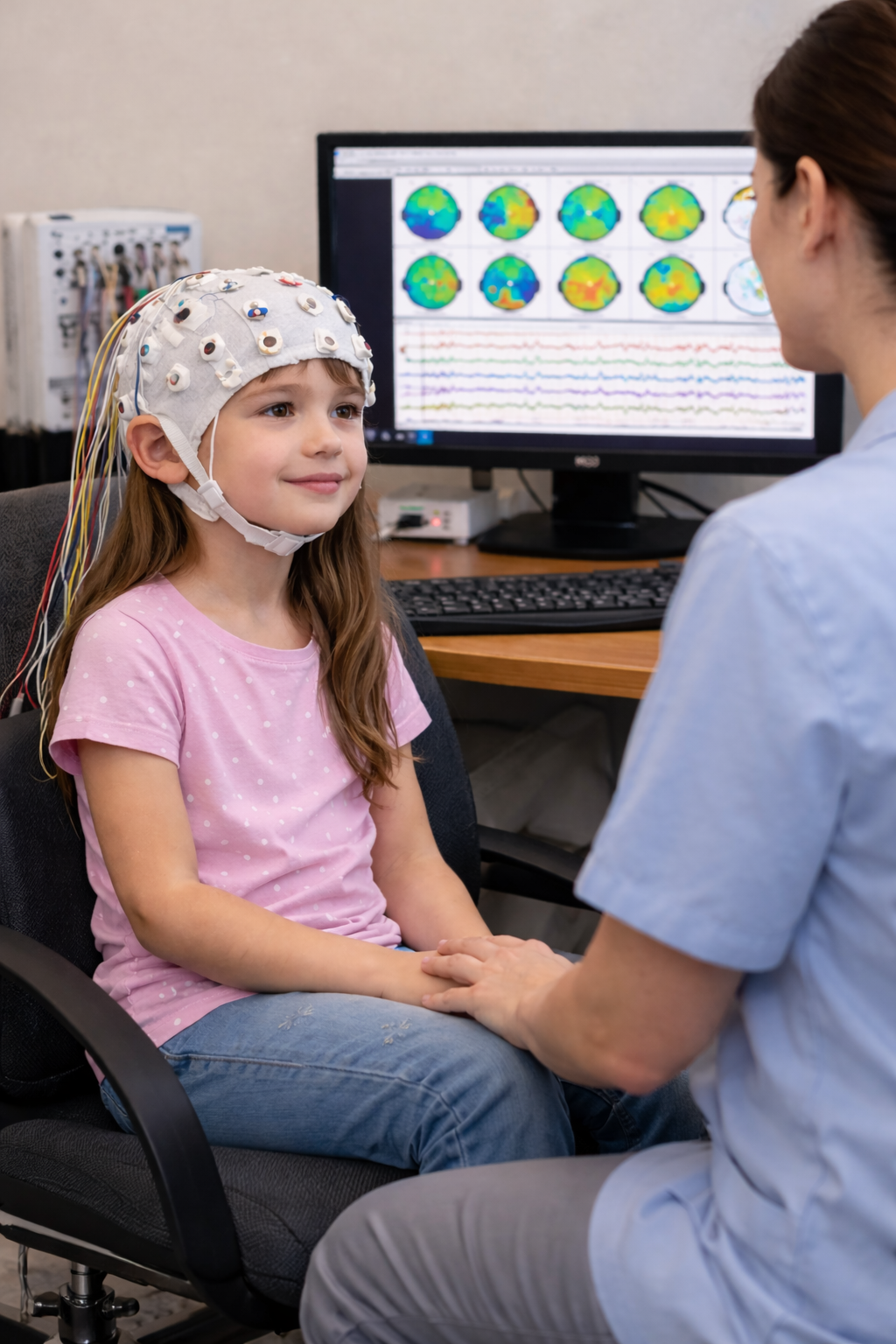
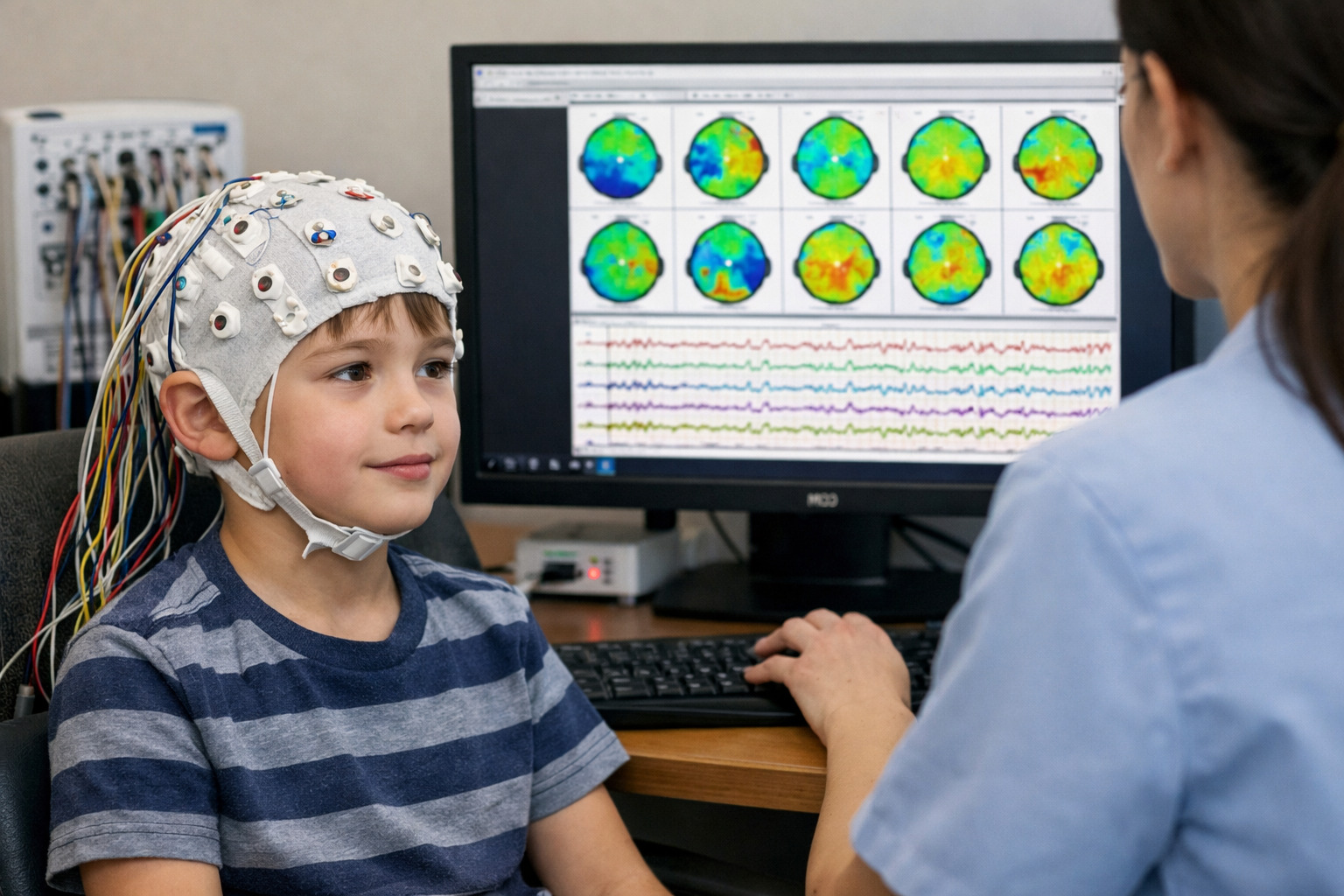
QEEG (Quantitative EEG) is a non-invasive assessment that records electrical activity from the scalp and provides information that may be considered as part of a broader clinical assessment.
At Brainshape, QEEG findings are reviewed together with the individual’s health history, current concerns and other relevant assessment information. QEEG does not, on its own, provide a diagnosis or determine whether treatment is required.
Where QEEG is considered clinically appropriate, the practitioner will explain what the assessment involves, why it is being considered and how the information may contribute to the overall assessment process.
Does my child have a brain imbalance?

QEEG AS PART OF AN ASSESSMENT
QEEG information may be considered alongside concerns relating to:
Attention during everyday activities
Learning or processing-related concerns
Sleep history
Stress-related concerns
Existing clinical or educational assessments
Other relevant aspects of the individual’s presentation
During a QEEG recording, electrical activity is measured using sensors placed on the scalp. The practitioner will explain the procedure and answer any questions before the assessment begins.
The information collected is considered together with the individual’s history, current concerns and other assessment findings. QEEG findings are not used in isolation to diagnose a condition or determine that a particular treatment is required.
Following the assessment, the practitioner will discuss the relevant findings and explain whether further assessment, care or referral to another appropriately qualified health professional may be appropriate.