Does my child have a brain imbalance?
Individualised Assessment and Care for Children with ADHD
Children diagnosed with ADHD may experience challenges in a variety of settings, including home, school and everyday activities. Every child's experience is different. At Brainshape, we begin with a detailed assessment to understand your child's health history, current concerns and individual presentation. Where appropriate, we discuss care options that may be suitable for your child and explain the reasons for our recommendations.
Our approach is family-centred, with care plans tailored to the individual rather than following a standard program.

-
We begin by listening to your concerns, reviewing relevant history and identifying what you would like to discuss.
-
Assessment methods are selected according to the individual’s presentation and clinical needs.
-
The practitioner explains the findings and discusses whether care, further assessment or referral may be appropriate.
-
Where care is recommended, the type, frequency and duration are determined individually and reviewed over time.
How we help
Family May Contoact us About:
-

Learning or Attention
-

Sensory Experiences
-

Emotional Regulation
-

Focus During Everyday Activities
-

Movement and Coordination
-

Balance and physical function
-

Existing assessments or diagnoses
This replaces the current condition-based “Who we support” section and removes direct advertising claims about ADHD, autism, dysautonomia, migraine, concussion & other diagnoses.

Dr Robert Melillo & The Melillo Method
WHAT IS MELLILO METHOD?
The Melillo Method is an approach developed by Dr Robert Melillo that incorporates activities relating to movement, sensory input, coordination and other areas of function. Some Brainshape practitioners have completed training in this approach and may draw on elements of that training when clinically appropriate.
The use of any activity or technique depends on the individual’s presentation, assessment findings and practitioner judgement. No particular outcome can be predicted or guaranteed.

THE BRAINSHAPE CARE PROCESS
Our care process is guided by individual assessment findings rather than a predetermined treatment pathway.



Understand the Individual
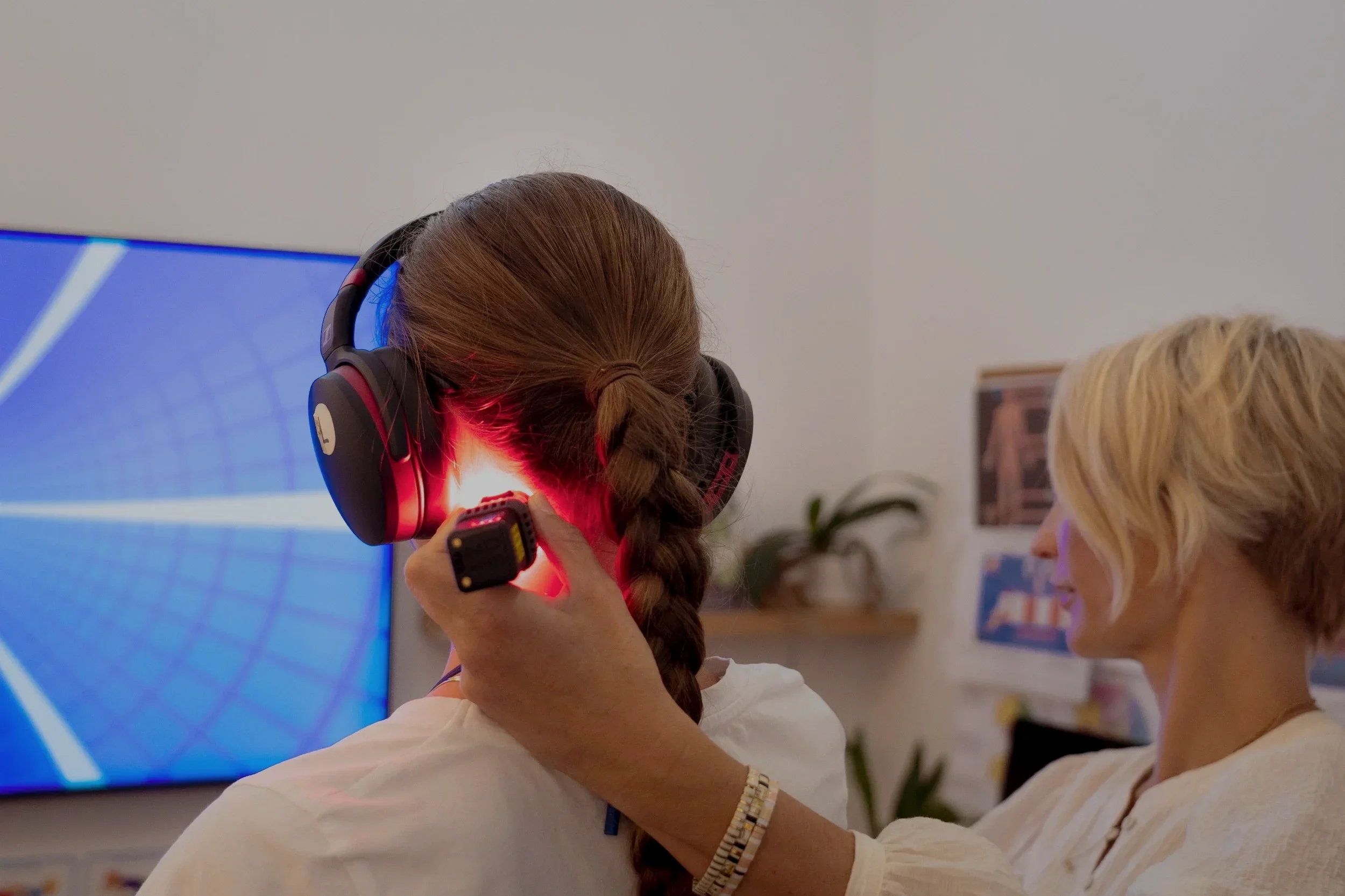
We calm the nervous system and support the brain’s energy needs so change is possible. Think PBM (red/near-infrared light), vagal-tone support, specific & gentle movement, and easy home foundations.
Select Appropriate Activities
Recommendations are reviewed over time and may be adjusted according to the individual’s presentation, response and circumstances.

Review and Adjust
Where clinically appropriate, a care plan may include movement, sensory-motor, balance, coordination or timing-based activities selected according to the individual’s needs.

OUR CLINICAL TOOLS AND TECHNOLOGY
Tools, Technology & Therapies
Brainshape uses a range of assessment tools and technologies where they are considered clinically appropriate.
The choice of tools depends on the individual’s presentation, health history and the purpose of the assessment or care plan. Use of a particular technology does not guarantee a specific outcome.
-
QEEG brain mapping:
May be used to record electrical activity from the scalp as part of an assessment process.
Photobiomodulation function:
The device also includes light-based technology that may be used where considered clinically appropriate.
Session format:
The practitioner will explain what the technology involves, why it is being considered and any relevant limitations or considerations before use.
-
These devices use specific wavelengths of light and may be incorporated into care where the practitioner considers them appropriate.
The purpose, suitability and use of photobiomodulation are discussed individually before treatment.
-
QEEG Brain Mapping (with the iSyncMe helmet)
HRV (vagal tone) AnalysisPrimitive Reflex,
Balance & Coordination Testing
Vestibular testing
Developmental/Functional Neurology Assessment
Timing/Attention measures (e.g., Interactive Metronome assessment)
Targeted labs when clinically useful
-
Photobiomodulation (iSyncMe helmet + Neurosolution lasers),
Primitive reflex integration,
Vagal nerve Rehabilitation
Vestibular rehab,
Vision/auditory drills,
Whole-body vibration,
Rhythm/timing work (e.g.,
Interactive Metronome),
Neurosage - digital neuro-therapy technology
Transcranial Direct current
Tens
Braintap
Red light therapy